The AI Code Control Plane Skill File Every CTO Needs
A practical skill file for steering Cursor, Claude Code, and agent workflows with review gates, human re-entry, and production guardrails.
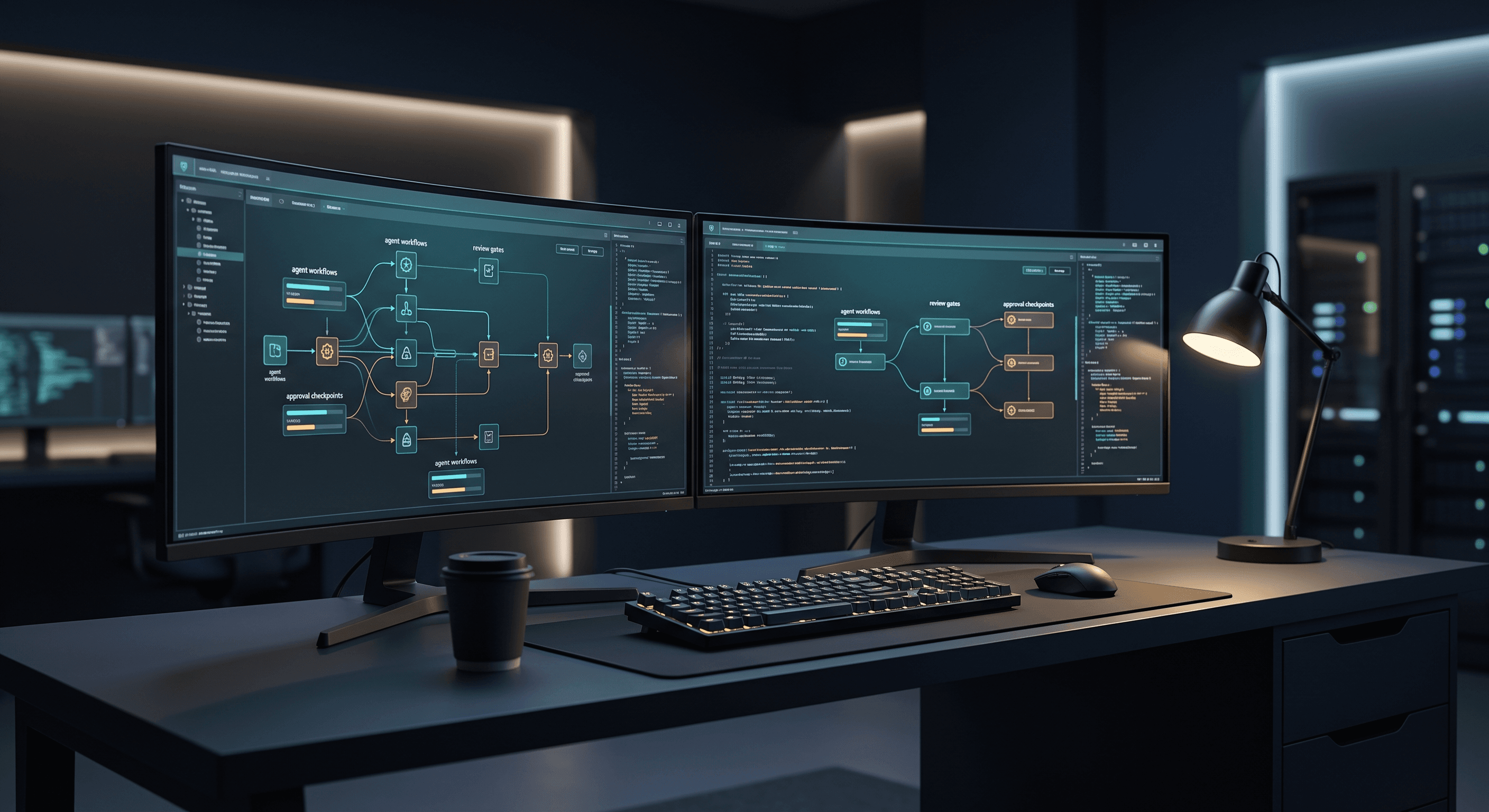
The AI Code Control Plane Skill File Every CTO Needs
AI coding does not fail because the model is weak. It fails when teams treat every agent like a senior engineer and skip the control plane.
Cursor, Claude Code, Codex, and the rest can draft fast. That part is no longer rare. The hard part is deciding who can act, who has to review, and where the workflow stops before it touches production.
Most teams still start in the wrong place. They compare models, argue about prompts, and then let the same workflow handle support replies, product notes, code changes, and deploy prep. That is how speed turns into confusion.
The better move is to build a control plane around the agent. The model can draft. The workflow decides risk. The human owns the blast radius.
What most teams get wrong
- They choose tools before they choose rules.
- They give one workflow too much freedom.
- They skip the handoff between draft, review, and action.
That pattern shows up in engineering first, then spreads. Support starts trusting the same assistant as product. Product starts asking for code changes. Ops starts using the same workflow for incident notes and production tasks. The company gets faster, but nobody can explain who approved what.
That is not AI adoption. That is delegated chaos.
The 5-part control plane
1. Classify the task before the agent touches it
Use three labels:
- Read: summarize, classify, extract, compare
- Draft: write a reply, propose a fix, outline a plan
- Change: edit code, update docs, open a ticket, prepare a deploy
- Ship: merge, send, publish, deploy
The closer the task gets to a customer, a system, or money, the more the workflow needs review.
2. Route by risk, not by team
Engineering, support, product, and ops all need the same rule set.
Low risk tasks can use cheaper models and looser review. Higher risk tasks need stronger models, tighter context, and a human gate.
If you route by team, you get four different policies. If you route by risk, you get one policy that scales.
3. Add a human re-entry point
Every workflow needs a seam where a person comes back in.
For code, that seam can be the diff review. For support, it can be the reply before send. For ops, it can be the final incident note before it goes out.
If nobody re-enters the workflow, the model becomes the owner by default. That is a bad habit.
4. Set a fallback ladder
The ladder should be boring:
- Let the agent draft the work.
- If the draft looks off, narrow the task.
- If the task still feels risky, move to a stronger model.
- If the task still matters, stop and ask a human.
That ladder matters more than model choice. It keeps the team from burning time on the wrong kind of automation.
5. Log the decision
If the task matters, record:
- model used
- prompt or task brief
- reviewer
- action taken
That log turns agent work into an auditable system. Without it, every improvement gets lost in chat history.
The skill file
# ai-code-control-plane.skill.md

## Mission
Let the agent draft fast, then keep humans in control of the risky steps.

## Default routing
- Read: public summaries, internal notes, classification
- Draft: specs, replies, diffs, runbooks
- Change: code edits, docs edits, ticket creation, deploy prep
- Ship: merge, send, publish, deploy

## Before any request
1. Classify the task.
2. Classify the data.
3. Classify the risk.
4. Pick the cheapest safe model.

## Escalation rules
- If the draft misses context twice, narrow the task.
- If the task touches production, money, or customer data, require human review.
- If the output changes state, review the diff before shipping.

## Human re-entry points
- Code: diff review
- Support: reply review
- Ops: incident note review
- Product: spec review

## Output format
- Task class
- Risk class
- Model used
- Reviewer

## Stop condition
Stop when the output is safe to use or safe to hand off.
That file is small on purpose. Small policies get used. Long ones get ignored.
A real CTO pattern
In fractional CTO work, I keep seeing the same split across distributed teams. One engineer throws every task at the biggest model. Another engineer uses a cheaper model for drafts, then reserves the stronger model for the hard parts. The second team often moves faster because they waste less time second-guessing the stack.
I use the same pattern with overseas teams. Before anyone touches a repo, I want the task labeled. Is this a read, draft, change, or ship action? If it is a change or ship action, I want a review gate. That keeps AI useful for the whole company, not just the engineering lane.
Support can use the same control plane to draft replies. Product can use it to clean specs. Ops can use it to summarize incidents and prep next steps. The value is not the model. The value is the route.
What changes when you do this
The team stops asking, "Which model is best?"
The better question becomes, "What is the safest way to move this task through the company?"
That shift matters. It turns AI from a novelty into operating discipline. It also keeps senior people focused on judgment, not on babysitting random outputs.
The model can draft fast. The control plane decides whether the draft earns the right to ship.
Get the Full AI Code Control Plane Skill File
I posted a breakdown of the full AI code control plane skill file, the routing checklist, and the fallback ladder on LinkedIn. Comment "Guide" on that post and I'll DM you the link directly.
Work With Me
I help engineering orgs adopt AI across their entire team, not just the code, but how product, support, and operations work too. If you want your org moving faster without growing headcount, let's talk.
Kris Chase
@krisrchase